

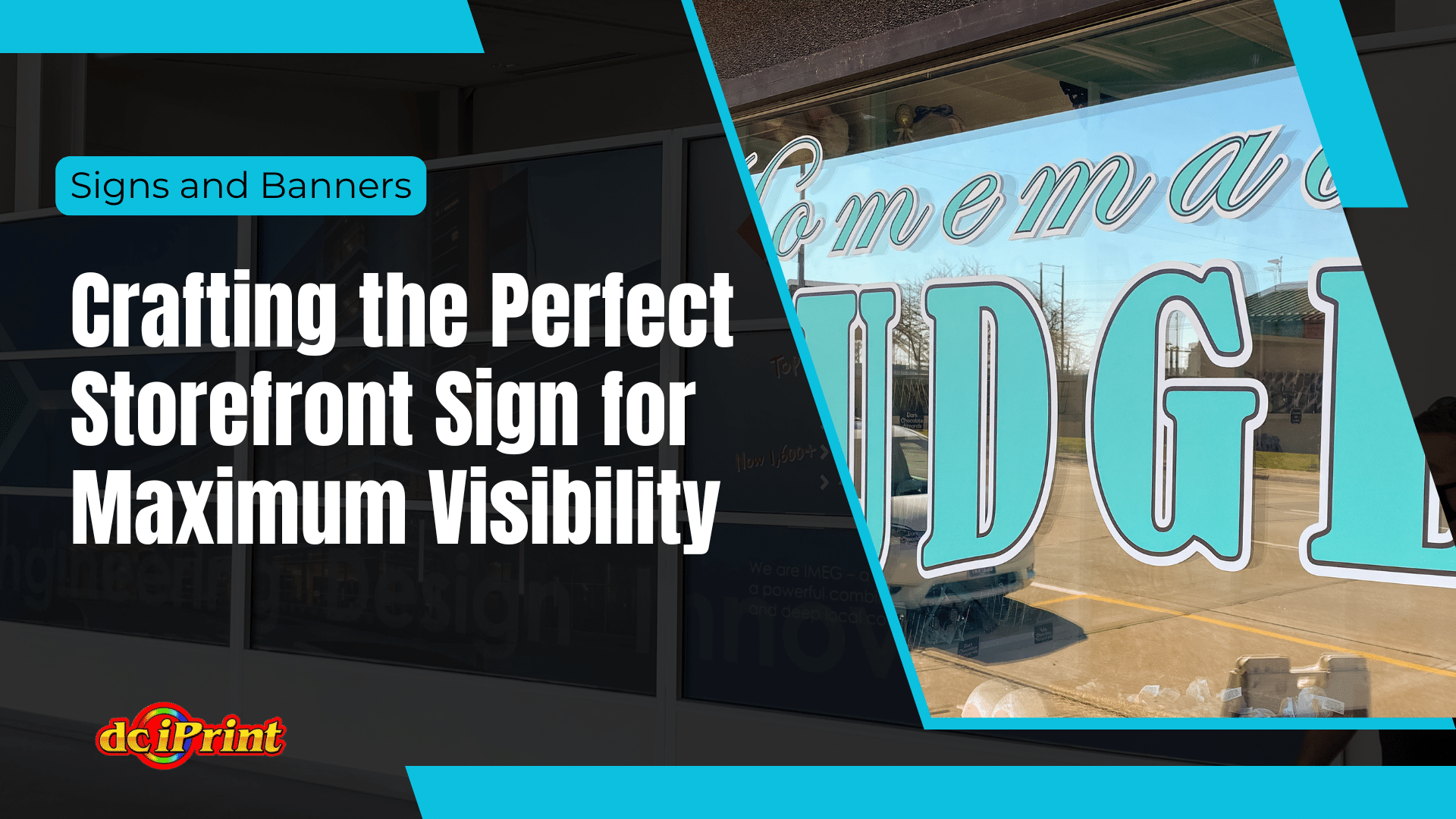
A standout storefront sign isn’t just a decorative element—it’s your calling card to the world, offering a first impression to anyone who passes by. At dciPrint, we’ve seen how the right sign can make or break your efforts to draw in foot traffic, build brand recognition, and establish trust. Below, we’ll explore key considerations in crafting a storefront sign that doesn’t just look good, but also maximizes visibility and impact.
Understanding the Role of Your Storefront Sign
Your storefront sign serves as both a directional tool and a brand ambassador. Whether you’re on a bustling main street or tucked away in a local plaza, people often rely on your sign to decide whether or not to walk through your doors. It’s a visual handshake—an introduction to who you are and what you do.
- First Impressions: A well-thought-out sign can convey professionalism, style, and credibility. This initial snapshot helps form the customer’s opinion of your business before they even step inside.
- Location, Location, Location: The effectiveness of your sign is closely tied to where it’s placed. Consider angles of view, the flow of pedestrian and vehicle traffic, and potential obstructions like trees or neighboring awnings.
- Instant Brand Recognition: If your business has a specific color scheme, logo, or tagline, your storefront sign should match or complement these elements. Consistency across banners, vehicle wraps, and other print materials reinforces brand identity over time.
Choosing Materials for Impact and Durability
Storefront signs come in all shapes, sizes, and materials. Vinyl, wood, acrylic, metal—each offers a distinct look and set of properties. Selecting the right substrate can determine how your sign holds up to weather conditions and how well it aligns with your brand personality.
- Vinyl and PVC: These can be cost-effective and work well for temporary or short-term signage. They’re also relatively lightweight, making installation simpler. However, if you need something long-lasting and capable of standing up to harsh environmental conditions, you might want a sturdier option.
- Metal and Aluminum: Aluminum composite panels and metal boards are popular for permanent signs. They resist rust, can handle tough weather, and often allow for striking, modern finishes.
- Wood: A wooden sign can lend a warm, rustic charm, perfect for shops with a more traditional or artisanal vibe. Just be mindful of maintenance—wood requires periodic sealing or painting to prevent water damage or fading.
- Acrylic and Backlit Options: Acrylic signs can deliver a sleek, contemporary look. Pair them with LED backlighting to stand out at night or in dimly lit areas. Illuminated signs often catch the eye more effectively than unlit versions.
Designing for Readability and Style
It’s one thing to have a visually appealing sign, but if potential customers can’t read it from a reasonable distance, you’re missing the mark. When designing for maximum visibility, clarity and contrast often take precedence over decorative flourishes.
- Font Choices: Stick to typefaces that are bold and easily legible. A fancy script might work for a small bakery sign up close, but it often becomes hard to read from the street.
- Color Contrast: Consider a high contrast ratio between your text and background. Dark text on a light background, or vice versa, makes it much easier for people to spot your sign from a distance.
- Appropriate Sizing: Plan your sign so the letters or logo elements can be recognized quickly. As a rule of thumb, bigger is better—especially if your store faces busy roads.
- Brand Consistency: If you have a signature color palette, integrate it into the sign. This reminds existing customers they’ve found the right spot, while new visitors begin to associate those hues with your brand.
Taking Advantage of Lighting
Light can dramatically change how a sign looks at different times of the day. If your business is open late, or you’re on a street where evening foot traffic is common, you’ll want to ensure your sign remains visible in low-light conditions.
- Backlit or Halo-Lit Signs: Mounting LED lights behind your sign can produce a subtle glow around the lettering, adding dimension and nighttime visibility.
- Front Lighting: Sometimes a well-placed spotlight or overhead fixture is enough to make your sign pop.
- Internal Illumination: For acrylic or channel letters, you can embed lighting within the sign itself. This is a great option if you have a more modern, minimalist design and want to ensure consistent visibility.
Accounting for Local Regulations and Permits
Before you finalize any sign design, it’s crucial to check your city or county’s zoning requirements. Signage regulations often dictate size limitations, acceptable materials, lighting restrictions, and even color choices in some historic districts.
- Permitting Process: Applications might require detailed drawings or mockups of your sign, including its dimensions and placement.
- Historic or Downtown Districts: In certain areas, local boards enforce strict aesthetic guidelines to preserve a neighborhood’s character. For instance, they might only allow wood or metal signs with muted colors, or bar backlit signage.
- Compliance Benefits: Following these rules can avoid hefty fines and ensure a smoother installation process. Plus, showing you respect community guidelines helps foster good relations with neighbors and local authorities.
Adding Depth and Texture
Flat signs can be effective, but dimensional lettering or layered materials can add a sense of depth that makes a storefront sign truly stand out.
- 3D Letters: Individual letters mounted on a back panel can create dynamic shadows during the day and look premium up close.
- Layered Elements: Combining different materials, like metal and acrylic, not only builds visual interest but also helps key design elements pop out at a glance.
- Finishes: From brushed metal to polished acrylic, the finish of your sign can bolster the intended vibe—sleek and modern, or artisanal and cozy.
Maintenance and Longevity
Even the sturdiest sign will need some care over time. Environmental factors like sun, rain, snow, and wind all take their toll, affecting color vibrancy and structural integrity.
- Regular Cleaning: Dirt and grime can accumulate, especially if you’re near a busy road. A gentle wash every month or so helps keep your sign looking crisp and inviting.
- Touch-Ups: Painted elements might fade under UV exposure. If you choose a painted wooden sign, be prepared for periodic re-coating or sealing.
- Protective Coatings: Options like UV-resistant laminates or anti-graffiti coatings can extend the life of your sign. They also reduce the likelihood you’ll need an emergency reprint if someone vandalizes it or the sun fades it prematurely.
Timing and Installation
Once you’ve settled on a design and chosen your materials, it’s time to bring your vision to life. A smooth installation often hinges on planning and collaboration with your print partner.
- Production Timelines: Depending on complexity, your sign might take anywhere from a few days to a couple of weeks to produce—especially if it includes custom machining or specialized finishes.
- Installing with Care: Proper mounting is key to preventing issues like uneven alignment or structural weakness. Professional installers consider wind load, wall type, and local height regulations to ensure everything is secure.
- Seasonal Factors: Some adhesives and paints don’t cure well in extreme cold or heat. Scheduling installation during milder weather can help avoid potential mishaps.
Leveraging Professional Guidance
Designing a storefront sign might seem straightforward, but the reality is a blend of technical knowledge and artistic finesse. That’s where we come in. At dciPrint, we prioritize doing things right the first time—because we know how much effort, time, and money a reprint or redesign can cost.
- Color Matching: We make sure the sign’s colors align with your existing brand materials—like vehicle wraps, banners, and window graphics—so your business’s look remains consistent.
- Material Selection: Not sure if vinyl or aluminum composite is right for you? We’ll walk you through the pros and cons, guided by the local climate and the sign’s expected lifespan.
- Design Refinement: If you have a rough concept, our team can help refine it into a final layout that checks all the boxes for readability, brand alignment, and compliance with local rules.
Thinking Beyond the Sign
A storefront sign is only one piece of your larger marketing puzzle. Ideally, your business should present a cohesive brand experience—from the sign above your door to the banner inside promoting a new product.
- Coordinated Graphics: Matching the sign’s colors and fonts with interior wall decals or window wraps creates a seamless experience for customers. This consistency builds trust and recognition.
- Digital Integration: If you’re active on social media, use similar imagery or slogans in your physical signage. Cross-promotion helps people who first see your sign find you online.
- Seasonal Updates: Consider seasonal or event-based signage that complements your permanent storefront sign. Temporary vinyl banners or window clings can draw attention to sales or special events without replacing your main sign.
Conclusion
Creating a storefront sign that truly pops is a thoughtful process—one that blends aesthetics, practical considerations, and a keen eye for brand cohesion. From choosing the right materials and fonts to navigating local regulations, each step contributes to a piece that not only signals who you are, but how well you run your business.
At dciPrint, we’re here to guide you through every decision, ensuring your sign comes out looking just as you envisioned—and maybe even better. By focusing on durability, readability, and brand alignment, we help you make the most of that pivotal moment when a potential customer first catches sight of your storefront. After all, in today’s competitive landscape, a sharp, attention-grabbing sign can be the difference between someone walking on by or stepping right in to see what you have to offer.