

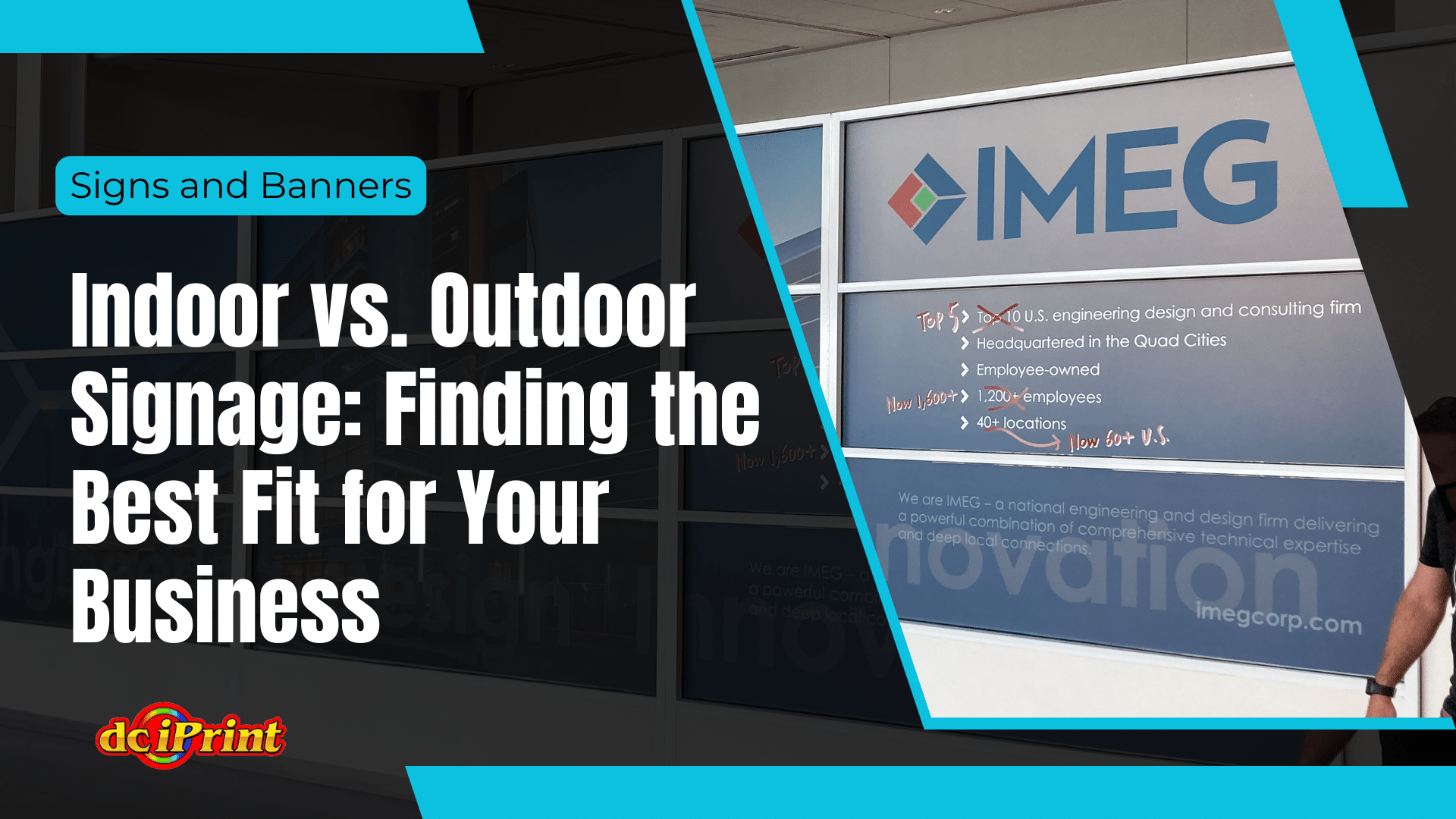
When it comes to promoting your business, signs are one of the most direct and effective ways to communicate with customers. But not all signs are created equal, and the environment where you place them—indoors or outdoors—significantly impacts everything from material selection to design. At dciPrint, we’ve seen firsthand how choosing the right type of signage can make the difference between a message that blends into the background and one that genuinely stands out. Below, we’ll explore the key factors in deciding whether indoor or outdoor signage best suits your needs.
Considering Your Primary Goals
The first step in selecting any sign is defining what you hope to achieve. Are you trying to draw people in from the street? Direct them once they’re already inside? Announce a new product or service?
- Brand Visibility
If you’re aiming to raise brand awareness among passersby, an outdoor sign has the potential to reach a much wider audience. Outdoor signs can attract foot and vehicle traffic, acting as beacons that say, “Hey, we’re here—come check us out!” - Customer Experience
Indoor signs tend to enhance the customer experience once they’ve stepped through your doors. They can direct foot traffic, highlight special products, or convey brand messaging in a more controlled environment. - Event Promotion
If you’re hosting an event—like a sale, product launch, or grand opening—both indoor and outdoor signs can work in tandem. An outdoor banner might announce the event, while interior posters or wall graphics can remind and guide people once they’re inside.
The clearer you are about your primary objectives, the easier it becomes to choose signage that meets those goals.
Differentiating Design and Materials
Outdoor Signage: Built to Withstand the Elements
Because outdoor signs must endure varying weather conditions, durability often takes precedence.
- Weather Resistance
From UV rays that fade colors to rainstorms that can ruin unprotected materials, outdoor signage has to be tough. High-quality vinyl, aluminum composite boards, or even durable fabrics with waterproof coatings can all be smart picks. - Size and Visibility
Outdoor signs typically need bolder designs, larger fonts, and high-contrast color schemes. People passing by often have limited time to take in your message, whether they’re driving or walking. The bigger and clearer your sign, the more likely it’ll catch their eye. - Lighting and Illumination
If you’re operating after sundown or in dimly lit areas, illuminated signs or strategic spotlights can make your business visible at all hours. LED backlighting can be particularly effective for channel letter signs, ensuring they remain clear from a distance.
Indoor Signage: A Chance to Impress Up Close
Indoor signs might not face harsh weather, but that doesn’t mean they’re any less important. In fact, because people are usually closer to indoor signs, the design details often require more precision.
- Refined Aesthetics
With indoor signs, you can use more delicate materials—like sleek acrylic, printed foam boards, or even vinyl wall graphics—because you’re not battling wind, rain, or sun. This opens the door for creativity, such as intricate cut-out lettering or glossy finishes. - Directional Signage
Offices, retail spaces, and event venues often rely on indoor signs for wayfinding. Whether it’s directing customers to the checkout area or guiding guests to a meeting room, clarity and legibility are key. - Brand Reinforcement
Indoor spaces are prime real estate for reinforcing your brand identity. You can incorporate your brand colors, tagline, or values in a way that complements the overall ambiance—think wall graphics, vinyl decals, or large-format banners that greet visitors as they walk in.
Making the Most of Location
Outdoor Placement Strategies
Before installing an outdoor sign, consider your surroundings and local regulations.
- Local Zoning Rules
Many cities have specific guidelines dictating the size, height, or even the color of outdoor signs, especially in historic or residential districts. At dciPrint, we often guide clients through these requirements to avoid unexpected fines. - Viewing Angles
Signs intended for vehicular traffic might need to be larger and higher, while those aimed at pedestrians can be placed lower or closer to storefront windows. If your sign is parallel to the road, passersby might need more time to read it, so keep text large and minimal. - Mounting Options
How you mount your sign—on a building facade, a freestanding post, or a sidewalk frame—can drastically affect visibility. Ensure your chosen method can withstand local weather patterns, especially if you’re in a windy or snowy climate.
Indoor Placement Strategies
Indoor signs benefit from a more controlled environment, but you still need to plan carefully.
- Eye Level Placement
For signs displaying important information—like product descriptions or directional cues—positioning them at eye level (roughly five feet from the floor) ensures maximum visibility for most viewers. - Lighting Considerations
Even indoors, certain lighting conditions—like fluorescent lights or shadowy corners—can obscure a sign. A well-lit, glare-free spot can make all the difference in readability. - Traffic Flow
Think about how people move through your space. Whether it’s a retail store or an office lobby, you want signs placed where they naturally catch attention without blocking walkways or creating clutter.
Balancing Budget and Longevity
Your signage investment should align with both immediate needs and long-term goals. An expensive sign that lasts ten years might be more cost-effective than a cheaper one that needs replacing in two.
- Material Durability
Outdoor signs, especially permanent ones, should often be constructed from high-end, weather-resistant materials. While there might be a higher upfront cost, you’ll likely save on maintenance and replacement expenses. - Reusability and Mobility
For short-term indoor promotions or events, think about using portable banners or retractable stands that can be easily moved or stored. These flexible options can be cost-effective if you run recurring promotions. - Printing and Finishing
The quality of the printing process and finishing—like lamination or UV-resistant coatings—plays a big role in how long your sign lasts. Investing in a reputable print partner (we happen to know one!) ensures you get reliable results that hold up over time.
Integrating Your Overall Branding Strategy
Whether you opt for indoor or outdoor signage, don’t think of your sign as an isolated piece of advertising—it should fit seamlessly into your larger brand narrative. If your logo uses a specific Pantone color, replicate that shade consistently across window decals, banners, and even vehicle wraps. This kind of uniformity tells customers you’re attentive to details, and it builds trust in your brand’s professionalism.
- Coordinated Colors and Fonts
The same fonts and color palette that appear on your website, brochures, and storefront should also be visible in your signs. Consistency encourages brand recognition and makes customers more confident in your services. - Message Alignment
If you’re promoting a particular service or product, echo that message across different platforms. An outdoor banner might pique someone’s interest, while an indoor sign can provide deeper insights or a call-to-action. - Customer Journey
Think about the sequence: someone sees your outdoor sign, enters your store or office, and then finds relevant indoor signage that directs them to a certain product or department. Each step should feel like a natural progression of the same brand story.
Maintenance Tips for Long-Lasting Signs
A sign is an investment, and like any investment, it benefits from proper upkeep. Outdoor signs, for instance, may accumulate dirt or debris over time.
- Regular Cleaning
A gentle wipe-down with a mild detergent can keep vinyl and acrylic looking fresh. Avoid harsh chemicals or abrasive tools that might scratch surfaces or fade printed graphics. - Check for Damage
For outdoor signs, keep an eye on edges and fasteners. High winds or storms can loosen bolts or tear weaker areas. Minor repairs done early can prevent major damage later. - Lighting Upkeep
If your sign is illuminated, replace flickering bulbs or LEDs promptly. Nothing says “negligent” like a half-lit sign, and it can inadvertently harm your brand image.
Meanwhile, indoor signs can fade if placed in direct sunlight or near heating vents. Simple measures, like relocating a sign away from intense UV exposure or cleaning off dust regularly, can prolong its lifespan.
How dciPrint Helps You Find the Right Fit
Choosing between indoor and outdoor signage might feel overwhelming, but it doesn’t have to be. At dciPrint, we walk you through each step—from selecting robust materials and ensuring correct color calibration, to final installation. Our goal? A seamless experience that leaves you with signage you’re proud to show off.
- Personalized Consultations
We start by asking about your objectives, budget, and location specifics. With that info, we can make tailored recommendations—maybe a durable aluminum composite for your building exterior, paired with sleek acrylic signage for your lobby. - Design Guidance
If you need help perfecting your design, we can advise on fonts, color contrasts, and layout to maximize impact. We understand the unique constraints of large-format printing and can help you avoid common mistakes that lead to wasted time and money. - Quality Assurance
Every sign that leaves our shop undergoes strict checks. We want to ensure that the colors match your brand specs and that the finishing—be it lamination, hemming, or grommet placement—is done to exacting standards. - Installation and Support
Some signs you can install yourself; others benefit from professional help, especially large outdoor ones that need secure mounting. We’re here to guide you either way, offering tips or taking on the installation ourselves if you prefer.
Making the Final Decision
In many cases, the best solution isn’t an either-or but a combination of both indoor and outdoor signage working together. Your outdoor sign draws in fresh interest, while your indoor signs nurture that interest by offering additional details and direction. Each type plays a different yet complementary role in your overall marketing strategy.
Think carefully about your location, your audience, and your business goals. If you’re primarily trying to catch the eye of people driving by, outdoor signage is obviously crucial. If you’re looking to impress clients or guide them once they’re inside, you’ll focus more on indoor solutions. Often, the sweet spot is to blend the two in a cohesive way that moves potential customers from awareness to engagement.
Conclusion
Indoor vs. outdoor signage doesn’t have to be a dilemma—each has its unique advantages, and the right choice depends on your business objectives, budget, and physical setting. Whether you decide to go with a towering billboard-sized banner or a series of stylish indoor graphics, remember that the quality and clarity of your messaging are key. A sign is more than a decorative piece; it’s a strategic asset designed to communicate who you are and why customers should choose you.
At dciPrint, we’re passionate about crafting signs that stand out for all the right reasons. We take pride in a meticulous approach, ensuring every piece fits not just your space, but your brand vision. If you’re ready to explore indoor and outdoor signage options—or want guidance on integrating both—we’re here to help you get it right from the very beginning. Because when it comes to making a statement, there’s nothing quite like a well-placed, expertly printed sign to carry your brand’s message forward.